

Blog
Informasi khusus untuk kesehatan kulit
Informasi khusus untuk kesehatan kulit
"Will Rejuran plump my face like a filler? And if it's supposed to, why don't I see much for the first few days?"
At our clinic in Myeongdong, Seoul, this comes up almost every time Rejuran does. Because it's nicknamed the 'regeneration injection', people expect an instant, obvious change - and when the mirror looks about the same right after, they get thrown. That's usually when the doubt creeps in: "Is this even working?"
That reaction almost always traces back to one thing: reading Rejuran as a filler-type treatment. A filler plumps the spot the moment it goes in. Rejuran was never meant to fill that spot at all - the reason for injecting it is different. So today I want to walk through what the main ingredient, PN (polynucleotide), actually does inside your skin, and why that earns it the 'regeneration injection' name. The same way I'd explain it across the desk in a consultation.
The one-line answer: Rejuran is called a 'regeneration injection' because its PN wakes up the fibroblasts in your dermis and prompts them to make collagen. It's an ingredient that moves cells, not one that adds volume.
My goal here is simpler than selling you a product. Once you realize that 'regeneration' actually describes two different jobs - filling a space, and building a recovery environment - it gets a lot clearer whether Rejuran is the right call for your skin.
Quick Highlights
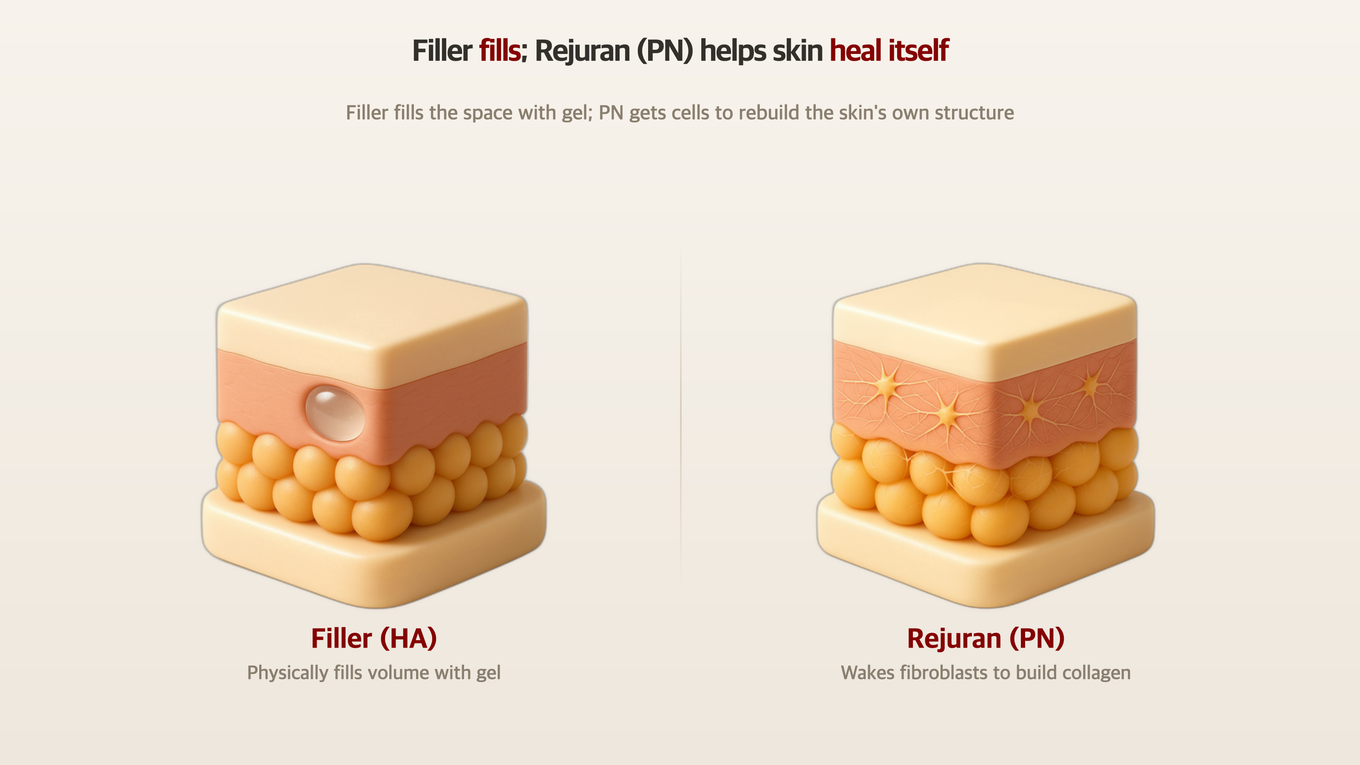
- Fillers (hyaluronic acid) physically fill a space to create volume.
- Rejuran's PN wakes up the fibroblasts in your dermis so they build collagen on their own.
- PN is a purified fragment from salmon DNA, so the body tends to tolerate it well and it works toward repair.
- The goal is skin quality that settles and improves over time.
- But it isn't for everyone. If lost volume is your concern, a filler is the better fit.
Let me clear up the misread first, because a lot of people picture Rejuran as a kind of filler.
Fair enough. Both go into the dermis by injection, both have awkward names, and they often sit side by side on the same treatment tray. But the two are close to opposite in purpose.
Feeling like 'nothing changed' in the days after Rejuran isn't a failure signal. Rejuran works on repair from the inside, so there's nothing to visibly plump up on the surface. Expect a filler's payoff - instant volume - from a regeneration injection, and the timing won't line up, so you end up disappointed. The change Rejuran is after is slower, and it happens deeper down.
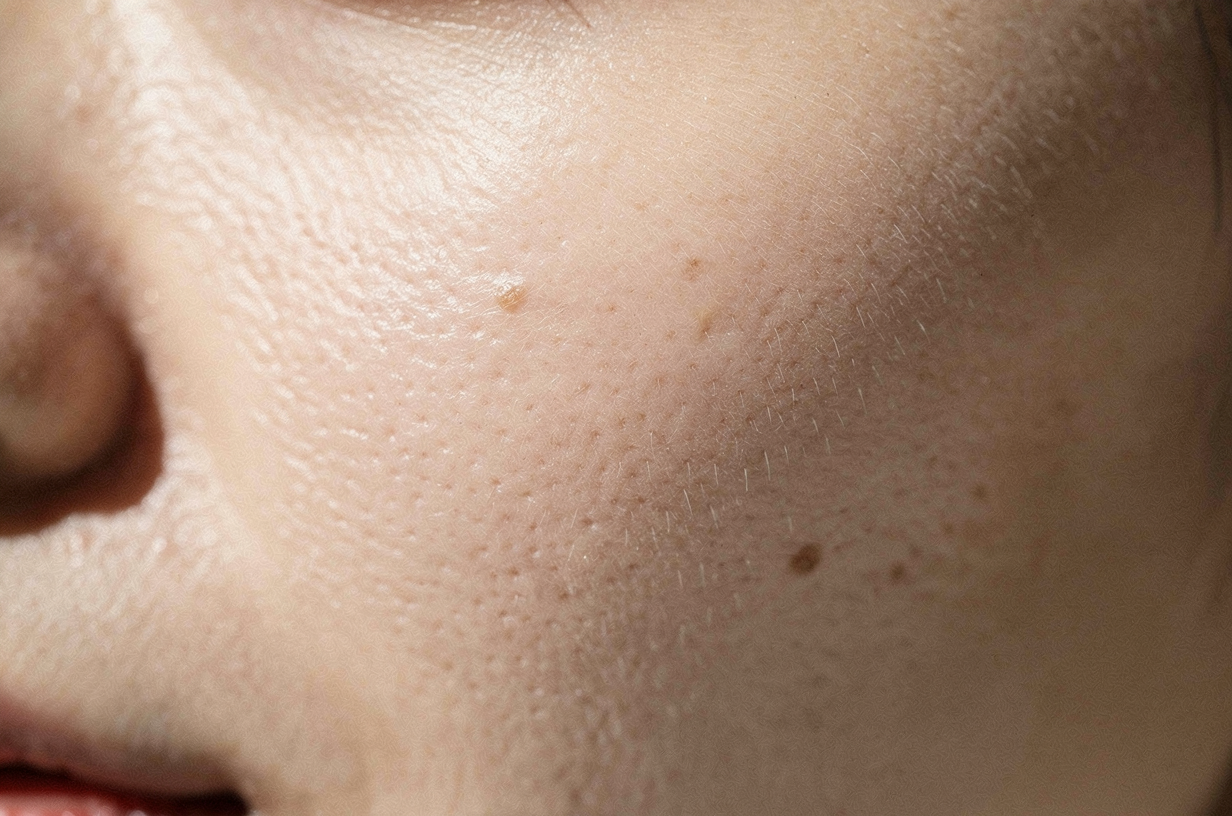
So if Rejuran doesn't fill, what does it do? This is where the 'regeneration injection' name actually comes from. Among skin boosters that improve texture by delivering ingredients into the dermis, Rejuran leans toward repair and recovery rather than hydration.
Its main ingredient is PN, polynucleotide. The name sounds technical, but the thing itself is simple: a long-chain fragment purified from salmon (and trout) DNA. Salmon DNA is close in structure to human DNA, so the body tends to tolerate it well, with little rejection. That's why Rejuran also goes by 'salmon injection' or 'DNA injection'.
Once PN is in the dermis, it does two main things:
💡 In plain terms - if a filler is bricks stacked in front of a crumbling wall to hide it, Rejuran is calling the builders (fibroblasts) back and handing them materials. The wall isn't standing the moment you leave, but over time the skin starts rebuilding its own structure.
This mechanism is fundamentally different from a filler's 'physical fill'. The pathways through which PN engages fibroblasts and collagen synthesis are laid out in a scholarly review on the skin-regeneration mechanism of polynucleotides. That said, this kind of recovery isn't magic - it takes time for cells to respond and for texture to settle, and the pace varies a lot with age and skin condition. So read it as a gradual change over several weeks, not a dramatic difference by the next morning.
Once you know this is about building a recovery environment, the next question follows naturally: "So what matters when you inject it, and how?"
With a regeneration injection like Rejuran, both the authenticity of the ingredient and the injection technique shape the result.
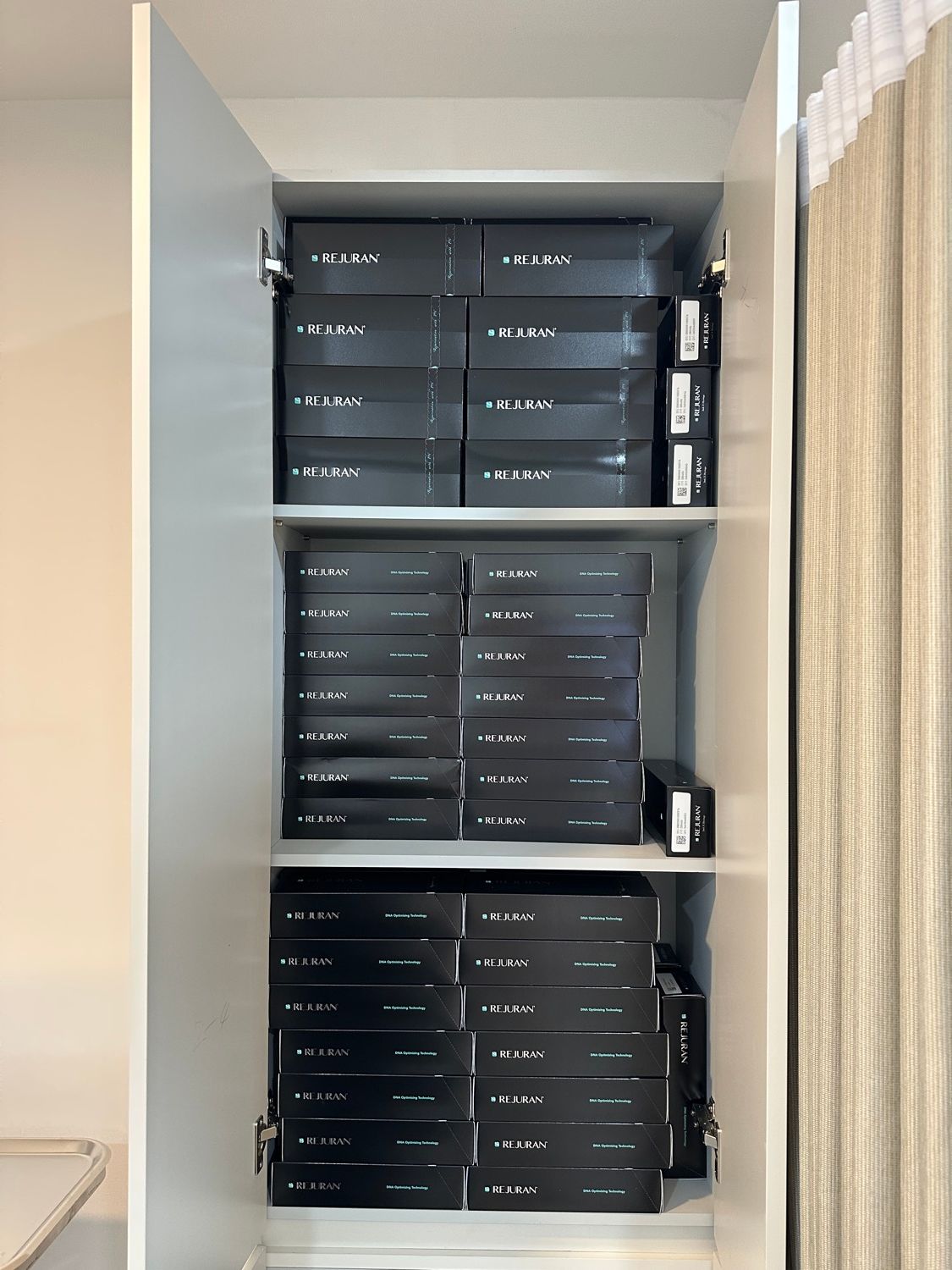
First, is it genuine? PN is a purified salmon-DNA ingredient, so how well it's purified and whether it came through official distribution is where safety and results start. Even when the name on the box says 'Rejuran', the first question is whether it's an officially distributed, genuine product. And because Rejuran isn't one-and-done but a treatment you repeat on a cycle, we use only officially distributed, genuine product every single time, and we make it easy for you to check its authenticity yourself before treatment.
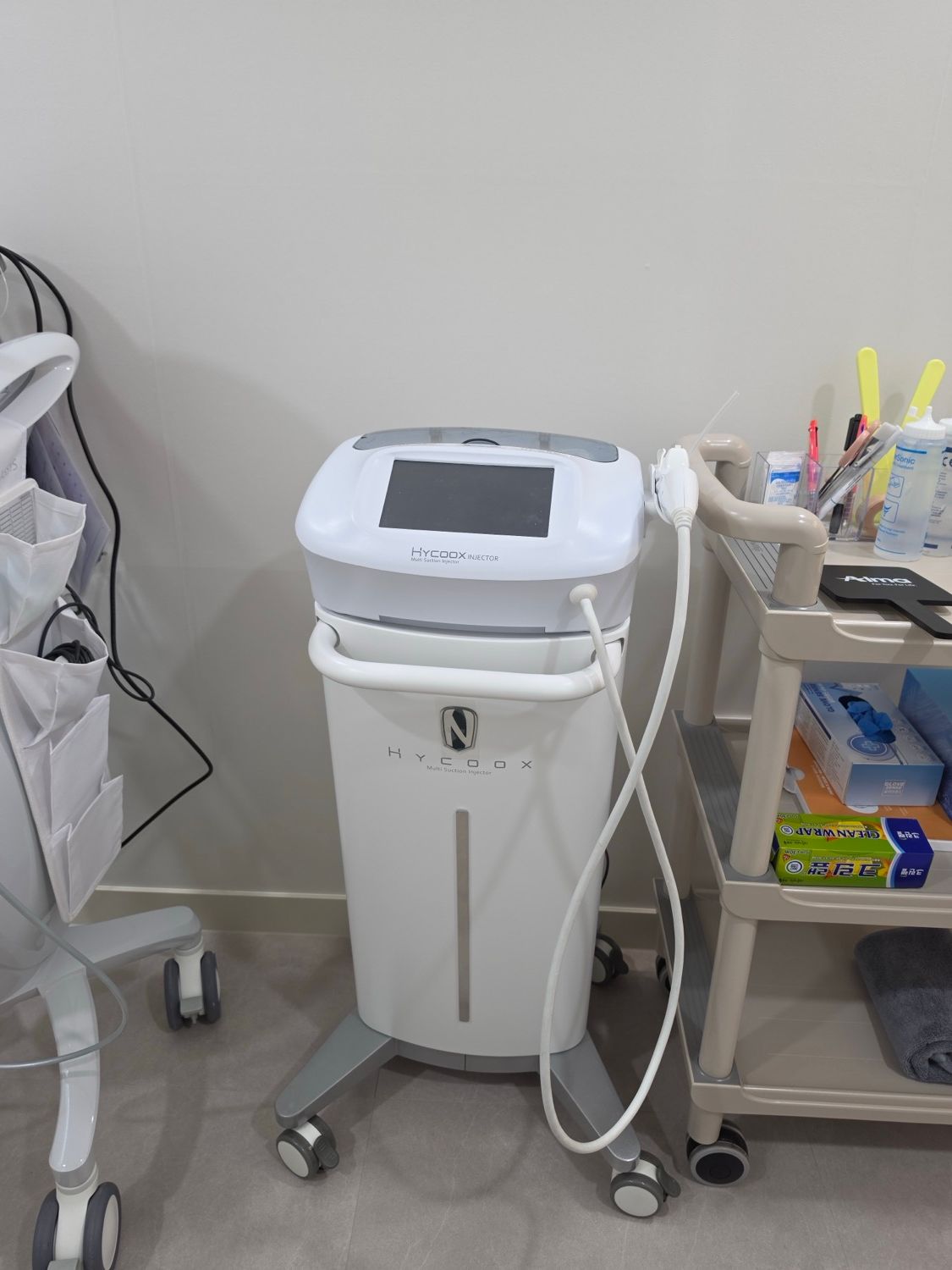
Second, how is it injected? The result also depends on placing the ingredient at an even depth, in the right amount, spread evenly through the dermis. Too shallow and it clumps at the surface; too deep or bunched up and the texture can turn uneven. So alongside placing it by hand, one injection at a time, at our Myeongdong clinic we also use a multi-needle injector such as HYCOOX to keep the depth and dose consistent. Recovery settles into smooth texture when the cells respond evenly.
Once the principle clicks, the natural next thought is "So what about me?" Here are the reference points I use to steer that decision - not hard rules, more like ways to think about it.
Rejuran and regeneration injections are less a one-time fix and more about building up texture across a cycle of sessions. So they sit a little differently from a 'change everything in one go' goal. Knowing that up front narrows the gap between expectation and result.
The more a treatment is hyped, the more misreadings come with it. Let me be straight about a few.
It doesn't dramatically fill in one session. As I said, Rejuran adjusts the environment so cells recover on their own. Real changes in texture show up slowly over weeks, and we usually plan it as a repeated cycle. Expect a 'one-shot reset' and the timing won't match.
It doesn't replace your exfoliation or your sunscreen. Even while repair is happening underneath, the basic surface care still has to stay in place for the texture to last. Sun exposure in particular chips away at the collagen you just worked to wake up, so protection is the partner to any regeneration treatment.
Swelling, marks, and individual differences happen. Because it goes directly into the dermis, faint swelling or needle marks can linger for a few days. They usually settle within days, but responses differ from person to person, and in rare cases a reaction can differ, so checking beforehand matters. And I'll say it again - using officially distributed, genuine product is where safety begins.
🩺 Doctor's Note - A question I get a lot is, "It's a regeneration injection - so why can't I see anything?" When that comes up, I pull out the picture we walked through today. Once you see that Rejuran wakes cells up, it makes sense why 'on a cycle, matched to your skin' is more accurate than 'everything at once'.
Another common one: "I want to try Rejuran, I'm curious about filler, I've heard of collagen boosters - where do I even start?" The confusion comes from the fact that all three aim at different things. Let me lay out the differences.
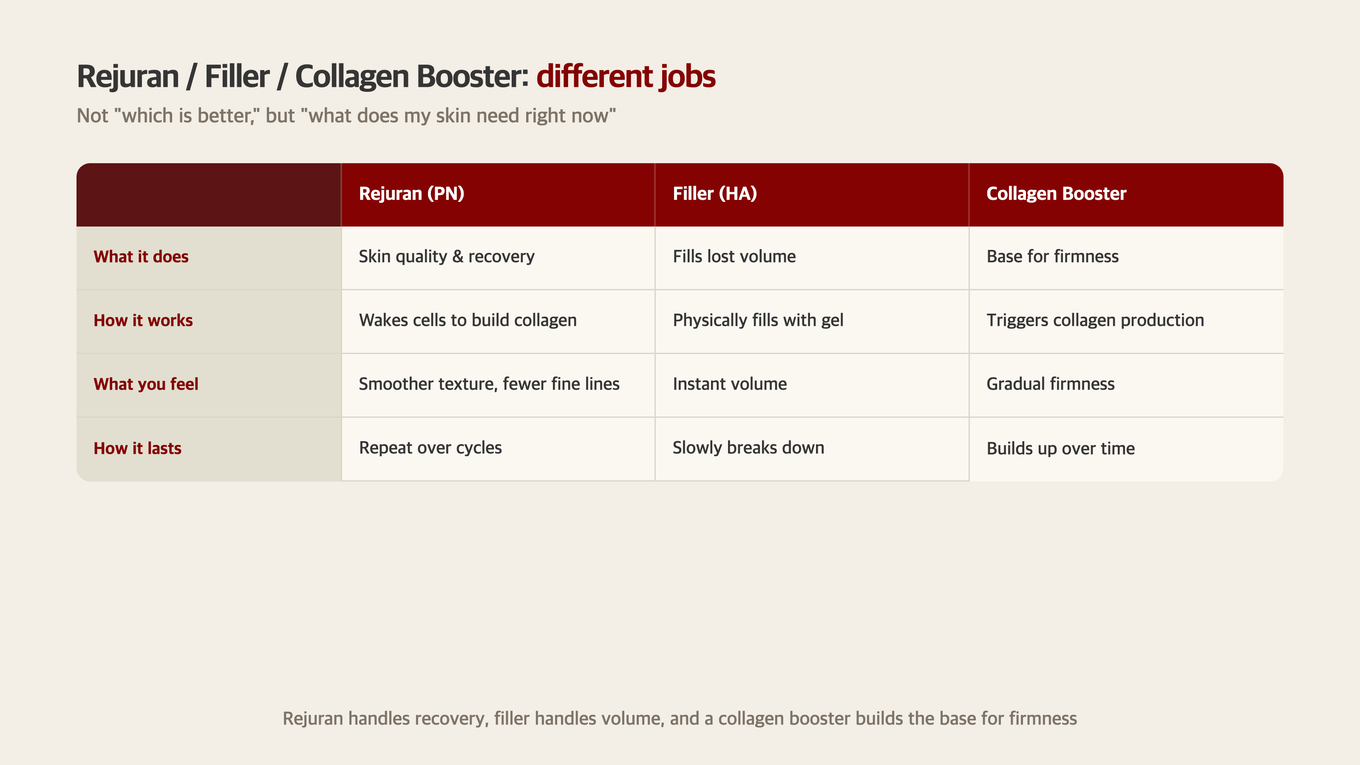
To boil it down:
⚠️ Worth knowing - each one has a different job. So instead of "which is better," the right question is "what is my skin short on right now." If you want the principle behind building dermal collagen, see how collagen boosters remodel the dermis; and to see how this differs from hydration-first glass-skin work, see how water-glow skin boosters change the dermis.
No - they're close to opposite in purpose. A filler (hyaluronic acid) injects gel to physically fill in lost volume. Rejuran (PN) doesn't fill; it gets the cells in the dermis to build collagen and repair damage on their own. So a filler plumps the moment it goes in, while Rejuran settles the texture over time.
Because Rejuran's PN wakes the fibroblasts in the dermis to build collagen again and works toward repairing damaged skin. It helps the skin recover on its own, and that's where the 'regeneration' name comes from. Since the ingredient is drawn from salmon DNA, it's also called the 'salmon injection'.
Rejuran is less a one-time treatment and more about building up texture across a cycle. Because it works by waking cells to recover, repeated prompts settle the texture better than a single one. That said, the cycle and number of sessions depend on your skin, so it's better to read the condition than to fix on 'exactly this many'.
Little immediate change is normal. It adjusts the environment so cells can respond, so the real change surfaces gradually over several weeks. The dewiness or marks right after are temporary parts of recovery, and that settling runs on a different clock than the texture improving. The pace varies a lot from person to person.
Because it goes directly into the dermis, faint swelling, needle marks, or light bruising can linger for a few days. They usually settle within days, but responses differ, and in rare cases a reaction can differ, so checking beforehand matters. Since PN comes from salmon DNA, it helps to tell us in advance if you have a history of allergies. In the end, safety starts with whether the product is officially distributed and genuine, and whether it's placed in a controlled setting.
If you've ever thought 'why can't I see anything' after Rejuran, it's usually because you expected it to do a filler's job - instant volume. The spot Rejuran is aiming for sits deeper than that.
What Rejuran's PN does is simple to state: it wakes the fibroblasts in the dermis so they build collagen and repair damage. That's why it's called a 'regeneration injection'. The goal is skin quality that settles over time - and the result depends on what product you use, whether it's genuine, and how evenly it goes in.

But don't forget: it isn't a treatment everyone needs. If lost volume is the concern, a filler fits, and if your skin's in good shape right now, there's no rush. Whether your skin is short on volume or on texture and recovery - that call comes first, and Rejuran comes after. Even just holding onto one line - 'Rejuran is a treatment that helps the skin recover on its own' - is enough.
#Rejuran #Polynucleotide #PN #SalmonDNAInjection #SkinRejuvenation #RejuranHealer #Fibroblasts #Collagen #SkinBooster #MyeongdongDermatology #ForeverClinic #SeoulSkinClinic