

Blog
Expert tips for healthy skin
Expert tips for healthy skin

"Do you feel like the pores around your nose and cheeks look especially large every summer?"
At our clinic in Myeongdong, Seoul, this is a common question during the summer. Pores that seemed fine through spring suddenly stand out after the rainy season, and they catch your eye every time you look in the mirror. Many then think, "My pores must have enlarged," leading them to scrub aggressively or start squeezing.
But this is where it gets a little misleading. Pores don't suddenly enlarge over a summer. They often appear more prominent, and this is primarily due to two factors: sebum and elasticity. Once you understand these two, it gets much clearer why pores stand out in summer - and what to actually work on.
Knowing that the term "pores" can cover issues with sebum or elasticity helps you identify which aspect is affecting your own pores. Once you understand the mechanism, it's easier to choose your own direction of care.
Key Takeaways
- The actual size of pores doesn't change overnight. When they look "bigger" in summer, it's usually because they appear more prominent.
- The visibility comes down to two factors - sebum (clogging the pore opening and casting shadows) and elasticity (collagen thinning and walls sagging).
- Summer affects both factors negatively due to heat and UV exposure.
- So care splits into two tracks - clearing sebum/dead skin, and rebuilding dermal collagen.
- The goal is to make them "less noticeable." Pores are pathways for sebum, so they can't be eliminated entirely. Squeezing or over-exfoliating often worsens the issue.
Let's clear up a misconception first. Pores themselves don't suddenly enlarge over summer.
Pores are pathways for sebum. Their basic size is largely influenced by slow-changing factors like genetics or age. So when they look "twice as big as last week," the pore didn't grow - the same pore just got easier to see.
So what actually changed? It comes down to two things:
In summer, pores usually stand out because of one of these, or both at once. So when it feels like your pores got bigger, the real question is simple: is the opening clogged, or are the walls sagging? Answer that first, and the right next step falls into place.
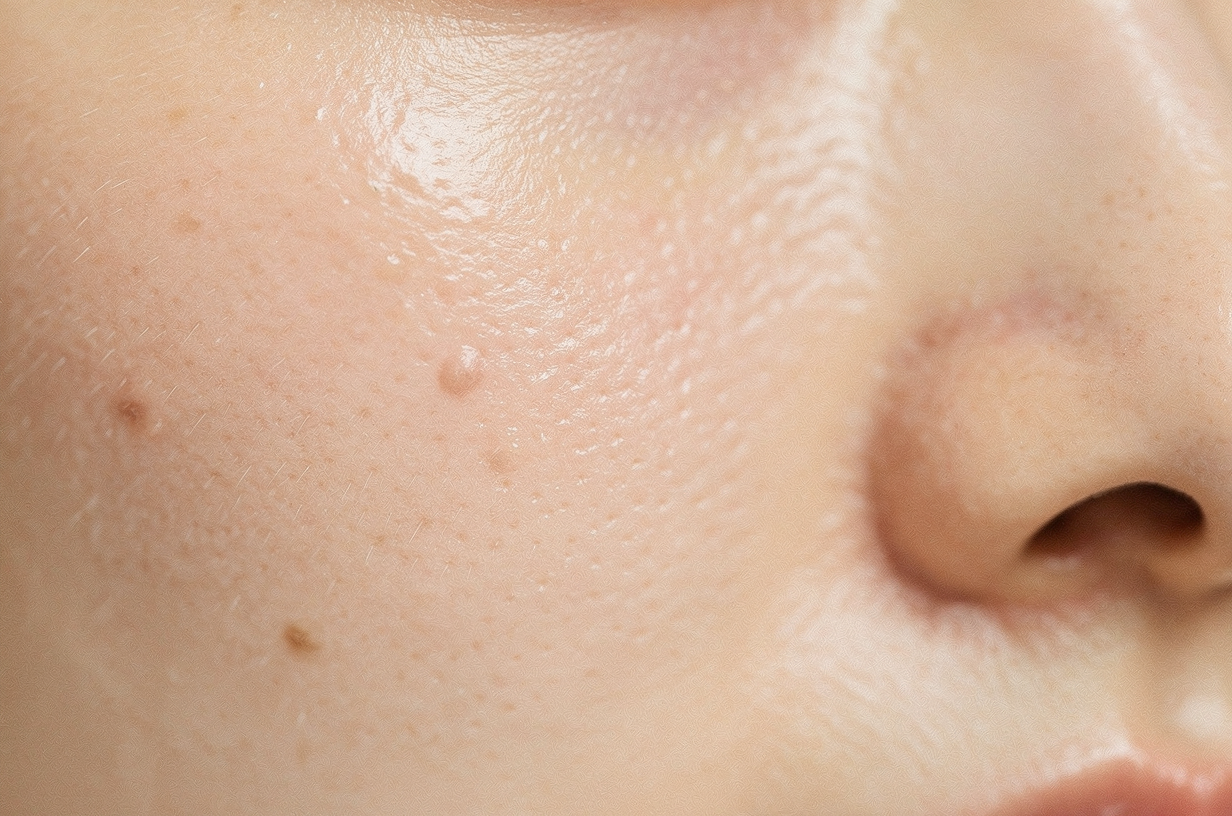
The less noticeable the pores, the better. What matters is whether the opening is clogged or the walls are sagging.
So why particularly in summer? It's because the two factors we discussed worsen together during this season. Let's take a closer look at each.
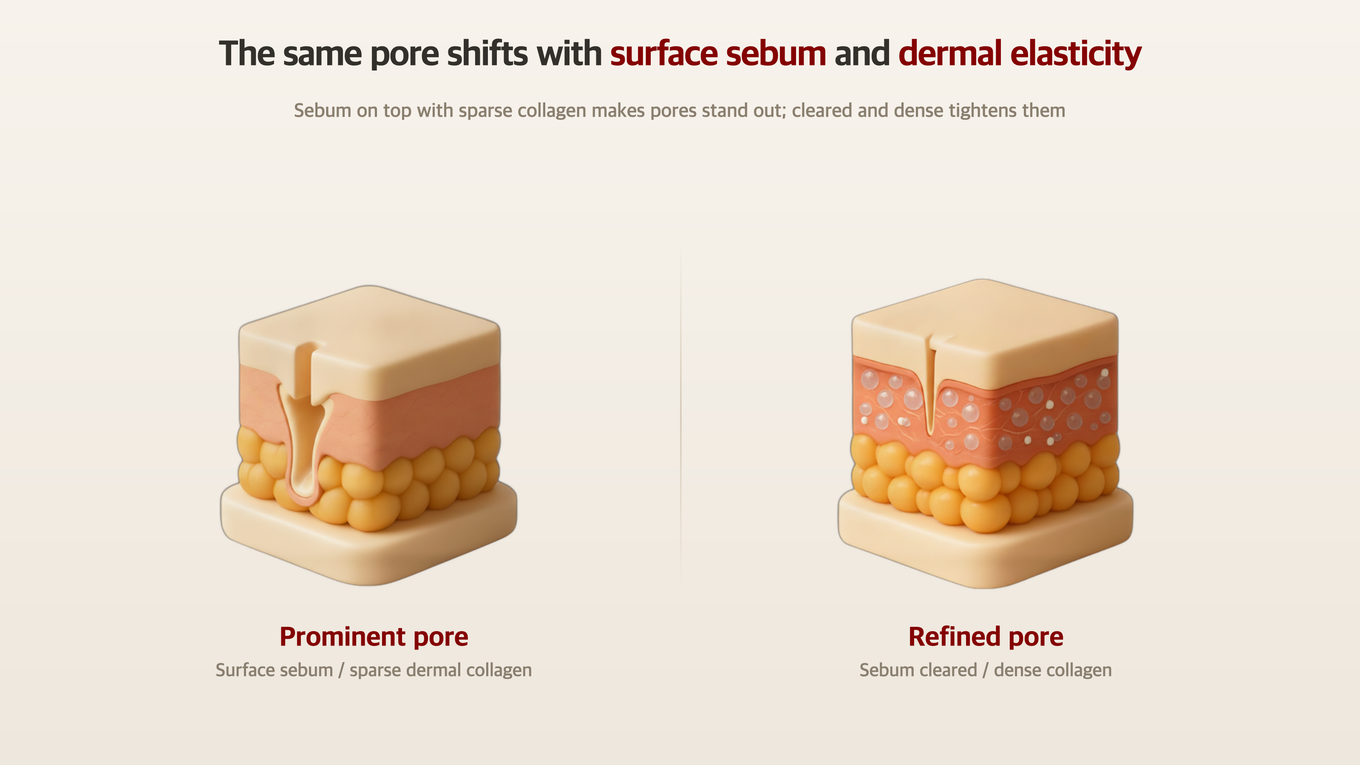
The left shows pores made prominent by surface sebum and sparse dermal collagen; the right shows pores refined by sebum management and dense collagen.
As it gets hotter, your sebaceous glands work harder. So summer brings more oil than spring, and areas with more glands - the nose and inner cheeks - get shiny fast.
Trouble starts when sebum mixes with dead skin and clogs the pore opening. The opening looks wider, and once it oxidizes a little it darkens, so the pore reads bigger. This is the same reason why a nose with blackheads looks like it has larger pores. The high humidity of the rainy season exacerbates this.
💡 Simply put - With the sebum factor, the opening is clogged. The fix is to clear and refine it regularly. Just don't squeeze or scrub hard - that irritation can rev up the oil glands and stretch the opening wider.
The second factor sits a little deeper. The pore walls are held up by dermal collagen and elastic fibers. When this support structure weakens, the force that keeps pores round diminishes, leading to a droopy teardrop shape.
The primary cause of collagen weakening is cumulative UV exposure or photoaging. UV rays are strongest in summer. If your cheek pores look vertically stretched even after washing, it's likely due to this elasticity factor.
⚠️ Note - The two factors call for different care. Clearing the opening won't tighten sagging walls, and rebuilding collagen won't help while the opening is still clogged. So the first thing to pin down is which factor is behind your pores.
With the factors divided, management naturally splits into two approaches. People often search for 'pore reduction' as a catch-all term, but in reality, the method depends on which factor you address. Here's a breakdown of the thought process used in clinical settings. This isn't the one right answer - just a way to think it through.
Approach for the Sebum Factor. Regularly clear and refine the sebum and dead skin that collect in the pore opening. Treatments like deep-cleansing Aqua Peel and gentle home exfoliation and cleansing habits fit here. The key is 'frequent and gentle,' not 'occasional and harsh.'
Approach for the Elasticity Factor. This focuses on rebuilding the dermal collagen environment. Treatments involve delivering RF (radiofrequency) heat into the dermis with micro-needles to stimulate collagen production. At our clinic in Myeongdong, Seoul, we use RF micro-needling devices like Potenza or Sylfirm X for this purpose. This approach supports sagging pore walls from the inside, focusing on droopy pores. If you're curious about how collagen boosters promote collagen production, check out How Collagen Boosters Promote Collagen Production.
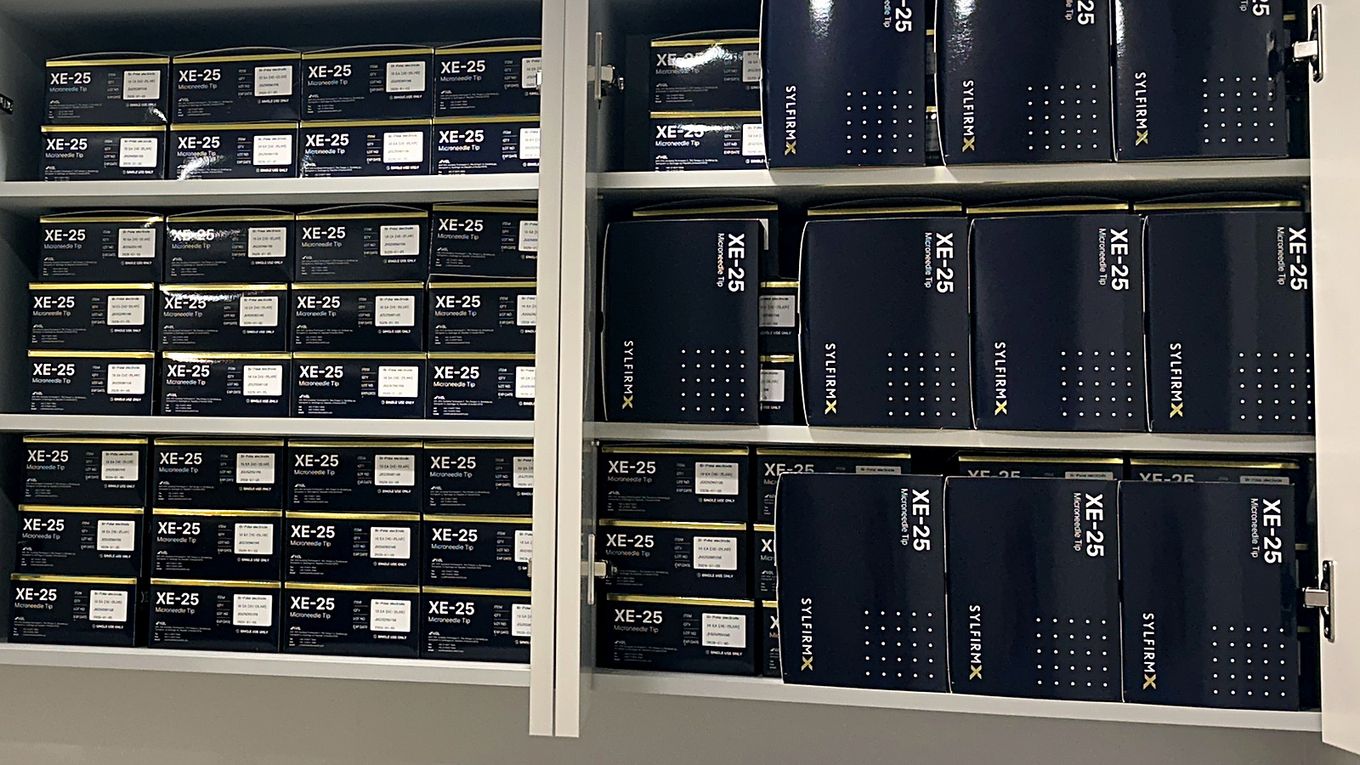
Managing the elasticity factor involves using micro-needles to deliver RF heat into the dermis to stimulate the collagen environment. At our Myeongdong clinic, we use a new genuine tip for every treatment.
A word on genuine products. RF micro-needling involves direct contact with the skin using tips (needle cartridges). At our Myeongdong clinic, we use a new, officially distributed genuine tip for every treatment. Responses to RF micro-needling vary from person to person, so we check your skin condition together before starting.
So which factor should you focus on first? Here's how they break down:
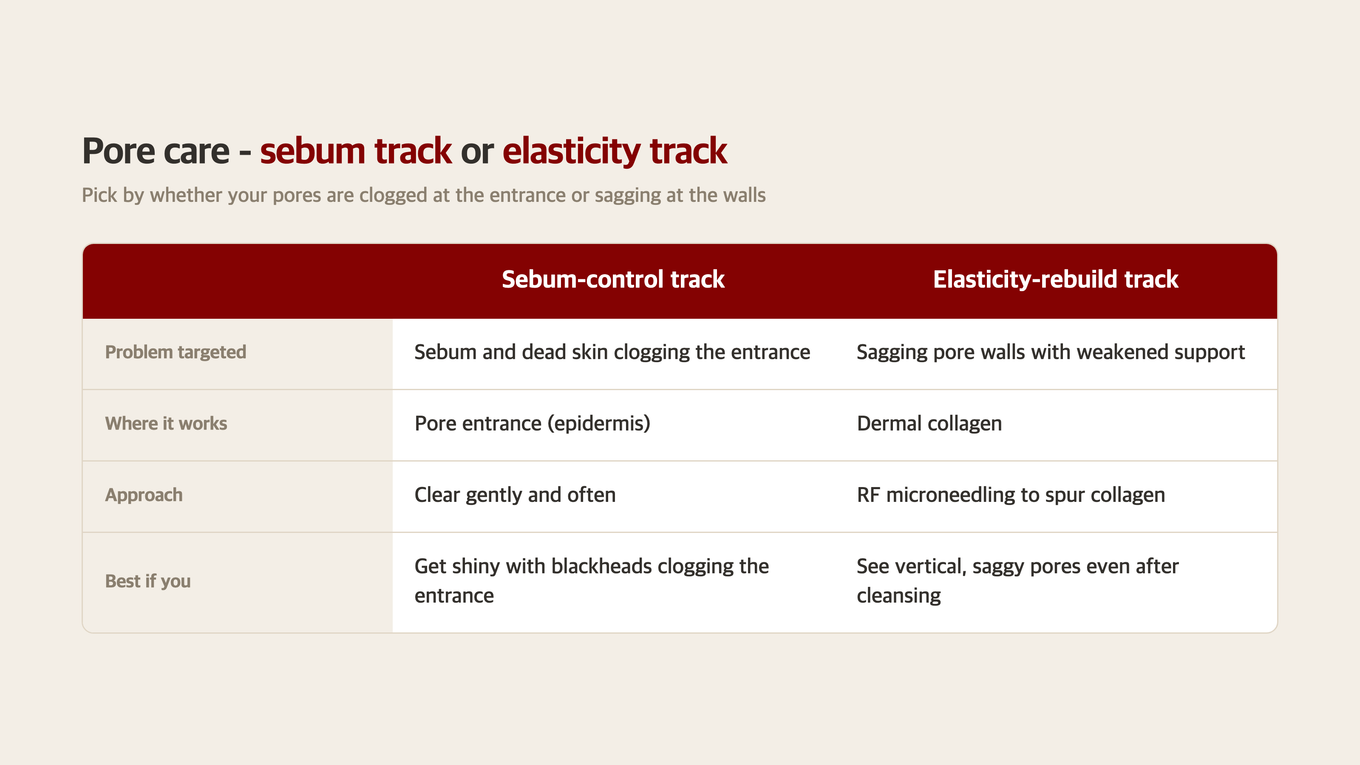
Sebum and elasticity factors target different areas and require different approaches, so choose based on your current pore condition.
Given how much expectation there is, there are also many misunderstandings, so let's address a few clearly.
Pores aren't something you aim to eliminate. Pores are necessary pathways for sebum and sweat. They can't be removed completely, and they shouldn't be. So the realistic goal is to make them "less noticeable." Setting your expectations here can help reduce disappointment.
In summer, be particularly cautious of irritation. If you think your pores look large and resort to harsh scrubbing or squeezing, it might feel satisfying at the moment, but the irritation can lead to inflammation, pigmentation, or a wider pore opening. Half of summer pore care is about handling your skin less.
The elasticity factor takes time. Rebuilding dermal collagen takes time, so it firms up gradually over several sessions rather than all at once. Set your expectations for months, not a "one-time fix," and the impatience eases. UV protection is fundamental to this management. UV rays are what can undo the collagen you've worked to rebuild.
Responses to treatments vary individually. Minor swelling or marks generally subside within days, but skin conditions vary, and reactions can differ, so pre-treatment assessment is important.
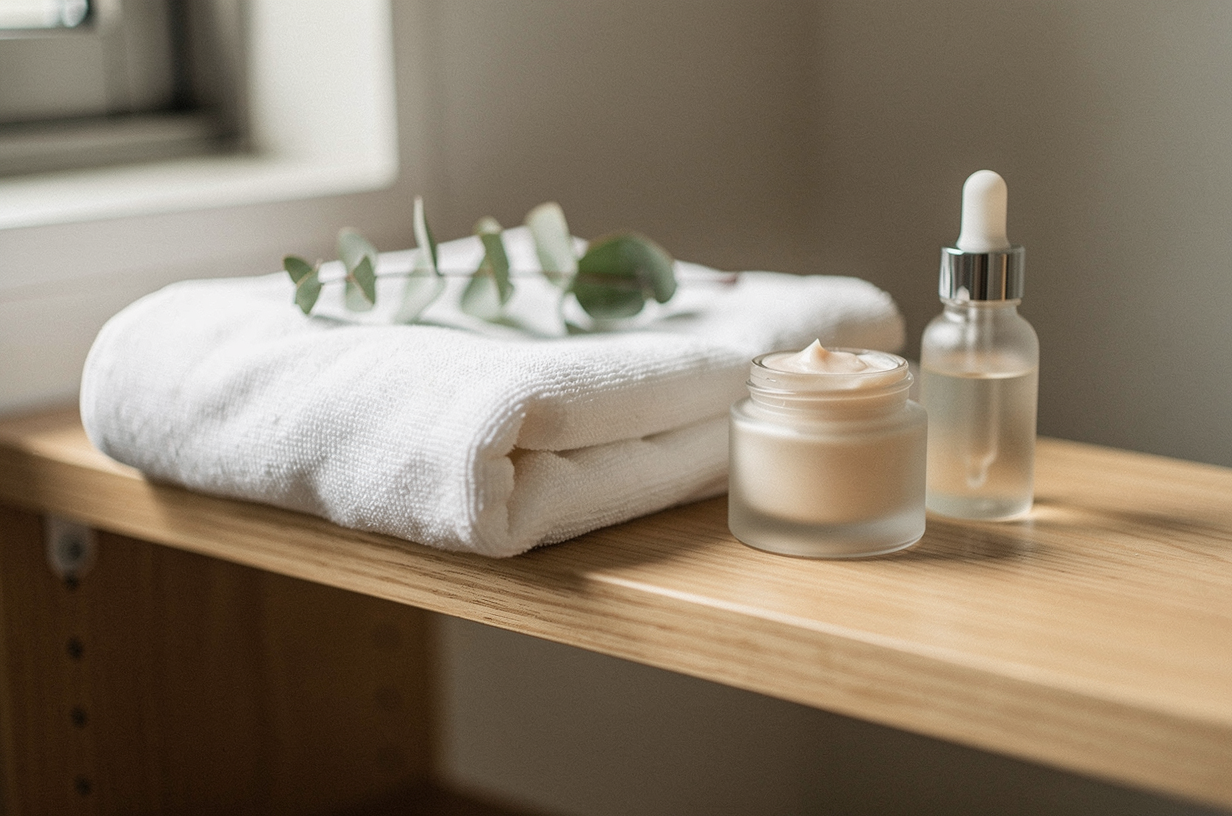
Half of pore care is handling your skin less and protecting it from UV. Ease off the irritation and keep the basics first.
The 'actual structural size' is hard to significantly reverse, but the 'degree of visibility' can be quite improved with management. Clearing sebum and dead skin from the opening softens the shadow, and rebuilding dermal collagen can make sagging walls look tighter. So approach it with 'making them less noticeable' rather than 'eliminating them'.
It's not that you can't because it's summer. However, since it's a season with strong UV exposure, post-treatment protection matters even more. There's no point rebuilding collagen only to have UV break it back down. So in summer we lean harder on post-treatment UV protection and soothing care.
Having a shiny surface but feeling tight inside is more common than you might think. Surface sebum production and inner moisture are different stories; you can have excess oil but lack dermal moisture, leading to tightness. In such cases, don't just strip the sebum - look at moisture and skin texture together, and the plan shifts a little.
Both are RF micro-needling devices that deliver radiofrequency heat into the dermis to stimulate collagen production. Their core principle is the same, but the method and strengths of delivering needles and RF differ slightly. So it's less about 'which is better' and more about choosing based on your skin condition and goals (whether focusing on pores, pigmentation, or redness).
If your pores seem larger in summer, it's usually not because they're actually enlarging, but because they appear more prominent. Two things drive it - sebum clogging the opening, and lost elasticity letting the walls sag. Summer, with its heat and UV rays, is a season where both factors deteriorate simultaneously.
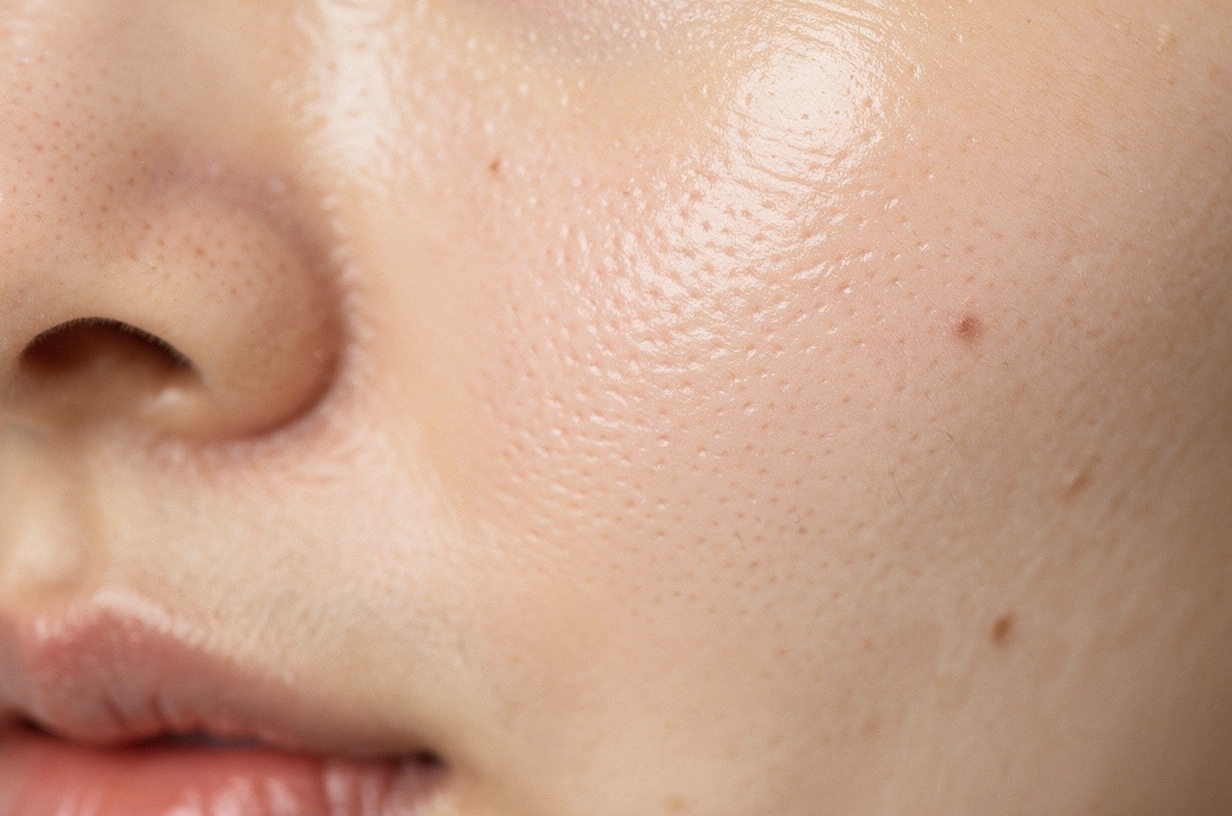
Refined pores aren't gone pores - they're pores with a clear opening and walls that hold their shape.
So care runs on two tracks. If the opening is the issue, clear sebum and dead skin gently and often; if the walls are the issue, work on rebuilding dermal collagen. Most often, both factors are involved, so addressing them together is common.
Remember one thing: the goal is to make pores less noticeable. Trying to tackle them by squeezing or scrubbing aggressively can make summer pores even more prominent. Start by working out whether your pores are clogged at the opening or sagging at the walls - that comes first, and the care follows from there.
#Pores #PoreTreatment #Sebum #PoreCare #Potenza #SylfirmX #Elasticity #SummerSkin #SeoulDermatology #ForeverClinic